Home › Guides › Wooden Ship Kits for Beginners
Wooden Ship Model Kits for Beginners: What to Know First
BuildAnArmy is reader-supported. When you buy through our Amazon links we may earn a commission, at no extra cost to you. How this works.
A wooden ship kit is the longest build in the hobby. It is not a model you finish in a weekend. You shape a hull from wood strips, fit the deck fittings and guns, and then rig the masts with thread, one line at a time. Most kits take months. This guide explains how wooden ship kits are built, what to add to the box, what to expect from your first one, and the history of the four kits in our catalog: HMS Victory and her bow section from Mantua, USS Constitution from Mamoli, and CSS Alabama from Model Shipways.
Solid hull, plank-on-bulkhead and plank-on-frame
The way the hull is built is the biggest difference between wooden ship kits, and it decides how hard the build will be.
- Solid hull. The hull is a block of wood, often basswood, that comes roughly shaped. You carve and sand it to the final form, then add the deck and fittings. There is no planking to learn, so this is the traditional starting point. Model Shipways, an American brand, has long been known for solid-hull kits as well as planked ones.
- Plank-on-bulkhead. A central spine, called a false keel, has crosswise bulkheads slotted into it. You cover this skeleton with strips of wood, the planks. Many European kits use two layers: a first layer of softer wood to get the shape right, then a thin second layer of a nicer wood such as walnut. This is the most common construction in kits.
- Plank-on-frame. The hull is built from many individual frames, like the ribs of a real ship, before planking. It is the most realistic method, and it allows a partly unplanked hull that shows the structure inside. It is also the most demanding.
Be aware that kit makers use these terms loosely. Some kits labeled plank-on-frame are closer to plank-on-bulkhead with extra frames. Read the listing and look at the instruction photos to see what you are actually getting.
| Hull type | Main skill | Difficulty | Good for |
|---|---|---|---|
| Solid hull | Carving and sanding | Easiest | A first wooden ship |
| Plank-on-bulkhead | Bending and fitting planks | Moderate to hard | Most builders, second kit onward |
| Plank-on-frame | Framing, fairing and planking | Hardest | Experienced builders |
Planking: the first big skill
Planking is where most beginners struggle, because a ship's hull curves in two directions at once. A straight strip of wood will not follow those curves on its own. The basic method:
- Fair the bulkheads. Sand the edges of every bulkhead so a plank laid across them touches each one along its full width. Skipping this step causes bumps and gaps later.
- Add filler blocks at the bow and stern if the instructions show them. They give the planks something solid to rest on where the curves are tightest.
- Bend the planks before you glue them. Soak the strips in water, then bend them with heat from a plank-bending iron or by holding them against a hot surface. Let them dry in shape.
- Start at the top and work down, mirroring each plank on the other side so the hull stays symmetrical.
- Taper the planks toward the bow and stern, because the hull is narrower there. Where the gap widens, fit short wedge-shaped planks called stealers.
- Hold, glue and pin. Use wood glue (PVA) for the planks, with pins or clamps to hold them while it dries. A spot of superglue can tack a stubborn plank in place.
Once the planking is finished, sand the hull smooth, fill any gaps with wood filler, and sand again. On a double-planked kit, the first layer does not have to be pretty. Its job is to give the second layer a smooth, accurate shape.
Rigging: the second big skill
Rigging is the web of lines that holds up the masts and works the sails. Kits divide it into two groups, and it helps to understand them before you start:
- Standing rigging holds the masts in place: the shrouds on each side, the stays fore and aft, and the ratlines, the rope ladders the crew climbed. On real ships it was tarred, so it is modeled in black or very dark thread.
- Running rigging moves the yards and sails: halyards, braces and sheets. It ran through pulleys, called blocks, and was usually a lighter, natural rope color.
Rig from the inside out and from the bottom up: lower masts first, then shrouds and stays, then the upper masts, then the yards and running rigging. Ratlines are tied with a small knot at every crossing, which makes them one of the slowest jobs on the whole model. Many builders display their ships without sails. It shows off the rigging and avoids the hard task of making cloth sails look to scale.
Tip: Run rigging thread across a block of beeswax before you use it. It lays down loose fibers, reduces fuzz and helps knots hold. A drop of diluted white glue on each knot keeps it from loosening.
Tools and supplies to add
Wooden ship kits include the wood, fittings and thread, but not the tools. Plan on these:
- Hobby knife and spare blades. You will use it constantly on wood. Change blades often; a dull blade crushes wood.
- A razor saw and a small miter box for cutting strips and dowels square.
- Sanding sticks and sandpaper in several grits, plus needle files.
- A pin vise with small drill bits for pins, eyebolts and rigging points.
- A plank bender or soldering-style bending iron.
- Clamps, clothespins and modeling pins to hold planks while glue dries.
- Wood glue (PVA) and thin superglue.
- Tweezers, ideally both straight and angled, for rigging and small fittings.
- A building slip or keel clamp to hold the hull steady and upright.
- Paint, stain and a clear finish, plus fine brushes.
- A cutting mat to protect the bench.

X-ACTO #1 Precision Hobby Knife

Tamiya HG Angled Tweezers
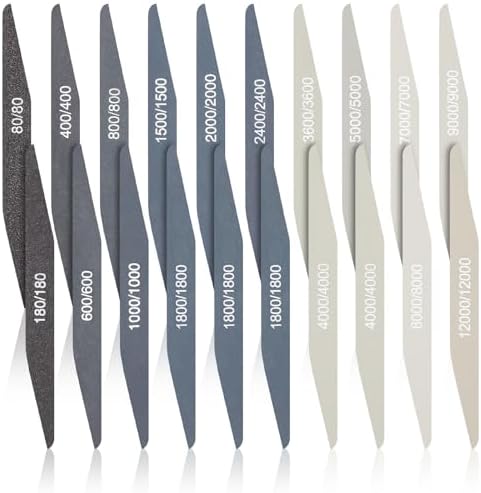
Honoson Sanding Sticks, 20 Pack

Golden Maple Detail Paint Brush Set, 10 Brushes

Dahle Self-Healing Cutting Mat, 9 x 12 in
Plastic cement is not used on wooden kits. If you already build plastic models, many of your tools will carry over, and our first model kit guide covers the basics.
The kits and the ships behind them
HMS Victory: Mantua, 1/78, plank-on-frame
HMS Victory is a first-rate ship of the line, rated at 104 guns. She was launched at Chatham in 1765 and is best known as Lord Nelson's flagship at the Battle of Trafalgar on 21 October 1805, where the British fleet defeated a combined French and Spanish fleet. Nelson was mortally wounded on her deck during the battle. Victory is preserved in dry dock at Portsmouth and remains a commissioned ship of the Royal Navy, the oldest naval ship still in commission.
Victory is usually modeled in her Trafalgar look, the "Nelson chequer": a black hull with yellow ochre bands along the gun decks, so the black port lids form a checkerboard pattern. Researchers have debated the exact ochre shade over the years, so do not worry about matching one precise tone.

Mantua HMS Victory, Plank-on-Frame
Mantua's 1/78 Victory is described as plank-on-frame, the most realistic construction. It is a large, ambitious model, close to a meter long, with a full three-masted rig. It is a project for a builder who is ready to commit many months, and it is better as a second or third ship than a first.
Check price on AmazonHMS Victory bow section: Mantua, 1/78
A section model builds only part of a ship, in this case the bow. It lets you learn framing, planking and deck work in a much smaller project, without the full rig. Section models also have their own appeal: they show the structure of a wooden warship, which a finished full hull hides.

Mantua HMS Victory Bow Section
Mantua's bow section shares the 1/78 scale of the full Victory kit, so it is a natural practice piece before the big model, or a display in its own right. It suits builders who want the craft of a wooden ship without the long rigging stage.
Check price on AmazonUSS Constitution: Mamoli, 1/93
USS Constitution was one of the six original frigates authorized by the Naval Act of 1794. She was launched in Boston in 1797 and rated at 44 guns. Her nickname, "Old Ironsides," comes from her 1812 battle with HMS Guerriere, when British shot seemed to bounce off her thick oak sides. She defeated HMS Java later that year, and the sloops Cyane and Levant in 1815. She is berthed in Boston and is the oldest commissioned warship still afloat.
The ship today wears a black hull with a white stripe along the gun ports, and that is how most models show her. Her colors changed during her long career, so if you want a specific year, follow a reliable reference for that period.

Mamoli USS Constitution Frigate, 1797
Mamoli's 1/93 Constitution models the frigate as she was built in 1797, according to its name. Like other Italian kits of its type, it is a substantial, fully rigged project. Check the listing for the construction method and contents before you commit.
Check price on AmazonCSS Alabama: Model Shipways, 1/200
CSS Alabama was a Confederate commerce raider, a sail-and-steam sloop of war. She was built in secret by Laird's yard at Birkenhead, England, and commissioned at sea in 1862. Under Captain Raphael Semmes she cruised the Atlantic, the Indian Ocean and beyond for nearly two years, capturing or burning dozens of Union merchant ships. On 19 June 1864, the Union sloop USS Kearsarge sank her in a battle off Cherbourg, France.
At 1/200, Alabama is a small scale for a wooden ship, so the finished model is compact. That makes it a reasonable size for a first ship, but small parts and fine rigging still demand care. Check the listing to see how the hull is built.

Model Shipways CSS Alabama Confederate Raider
Model Shipways is an established American maker of wooden ship kits. Its 1/200 Alabama is the smallest-scale wooden ship kit in our catalog, which makes it a more manageable size for a first ship. It also suits anyone who reads about the naval side of the Civil War.
Check price on AmazonNot sure you want a wooden kit at all? A Piececool metal HMS Victory is a quick desk version of the same ship; see metal and wood 3D puzzle kits. Our warship kit guide covers plastic ships.
Realistic expectations
Wooden ship modeling is a slow craft, and going in with the right expectations matters more than any tool.
- Allow months. A large kit like the Victory can take a year or more of regular evenings. Even a smaller kit takes many weeks.
- Instructions vary. Some kits, especially older European designs, have brief instructions and expect you to work things out from drawings. Read everything before you start, and study the plans.
- Your first hull will not be perfect. Small gaps and uneven planks are normal. Filler, sanding and paint hide a great deal.
- Space and dust. You need a bench where the model can stay out for months, and sanding wood makes dust. A finished ship also needs a safe home, ideally a display case.
- Start smaller. If you have never built a wooden ship, a compact kit or the Victory bow section is a better first project than a full first-rate ship of the line.
To see how wooden ships compare with plastic kits, block sets and other model types, read model kit types compared. For unfamiliar terms, the model kit glossary can help.
Quick answers
What is the easiest kind of wooden ship kit?
A solid-hull kit. You carve and sand a wooden block instead of planking, so you can learn fittings and rigging before tackling planking.
How long does a wooden ship kit take?
Usually months. A small kit may take several weeks of evenings, and a large ship like the 1/78 Victory can take a year or more.
Do I need to add sails?
No. Many builders leave sails off to show the rigging. Check whether your kit includes sail material if you want them.
What glue do wooden ship kits use?
Wood glue (PVA) for most joints and planking, and thin superglue for metal fittings and knots. Plastic cement does not work on wood.
Is HMS Victory a good first wooden ship?
It is a big, complex model, so most builders do better starting with something smaller. The Victory bow section is a gentler way to learn the same techniques.
Keep reading
 Types
Model Types Compared: Plastic Kits, Block Sets, Die-Cast and RC
Plastic kits, block sets, die-cast, 3D puzzles or RC? Compare build time, tools, skill, detail, durability and display size to pick the right…
Read guide Types
Plastic Model Kit Difficulty: How to Tell How Hard a Kit Is
How hard is that model kit? Learn to judge difficulty from skill ratings, part count, scale, tracks, clear parts, photo-etch, decals and tooling…
Read guide Types
Die-Cast and Metal Build Kits Explained: Guns, Cannons and More
What die-cast and metal build kits are: Goat Guns miniatures, Massimo Precision, Civil War cannon kits, tools, build time, finishes, display and safe…
Read guide